ServicesElectrical Repair
Electrical Repair in River Oaks
When a breaker keeps tripping or an outlet goes dead, we trace the fault back to where it starts, explain what we found in plain terms and repair it with parts suited to the circuit. You get a fix that holds and a home that runs as it should.
Repairs That Start With the Cause
Most electrical problems show up far from where they begin. A dead bedroom outlet can trace back to a loose backstab connection two boxes upstream. A breaker that trips every afternoon may be fine; the circuit behind it may simply be carrying more than it was built for. We test before we open walls or swap parts, so the repair matches the fault.
Good repairs also help your running costs in a quiet way. A loose or corroded connection resists current and turns some of it into heat inside the box. Tightening, replacing and properly terminating those points removes a hidden source of waste and, more importantly, a fire risk.
If what we find points to something larger, such as a panel near the end of its life or wiring that needs replacing, we tell you plainly and explain the options. Most visits end with a straightforward repair.
What We Do on a Repair Visit
Testing and tracing circuits
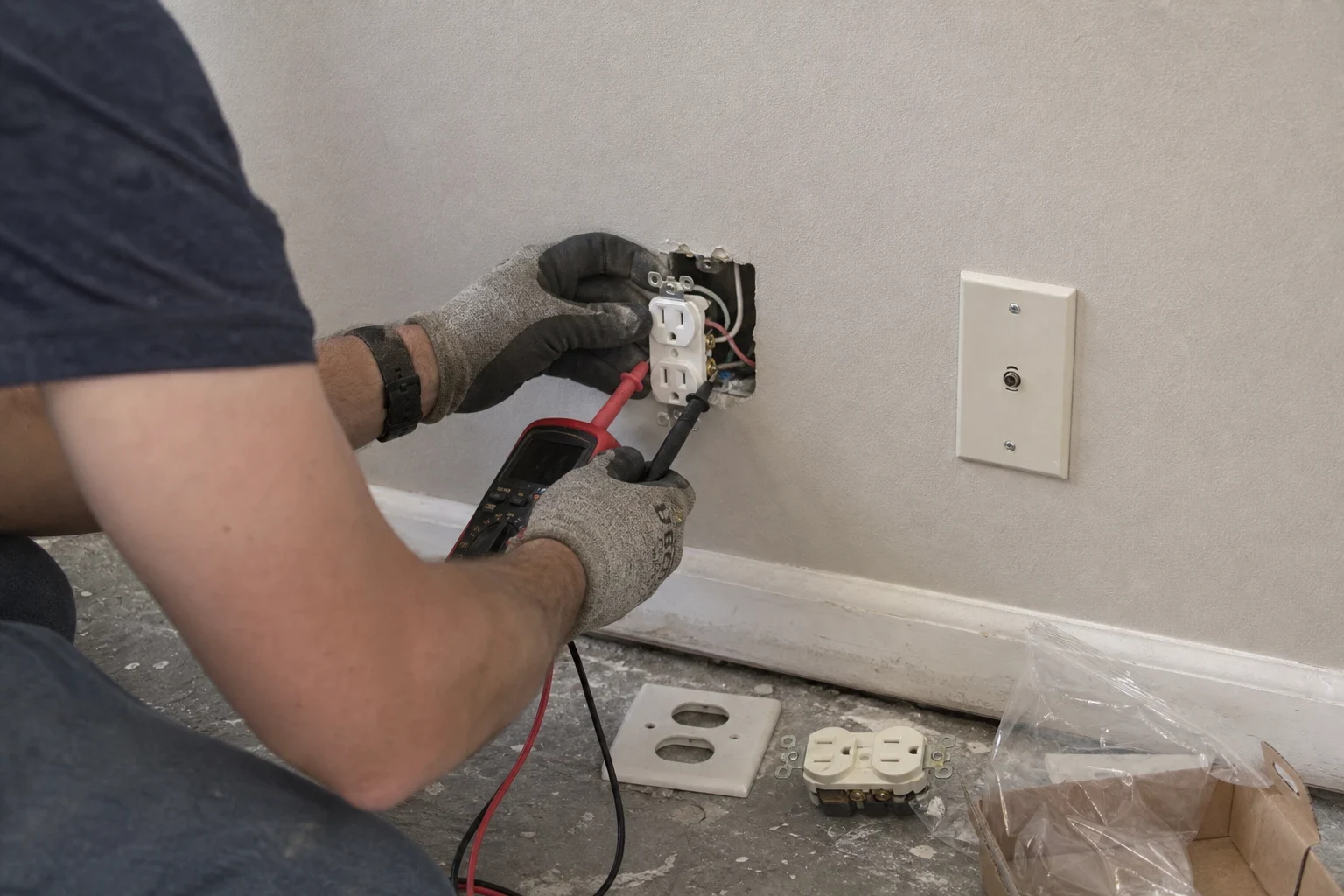
Meters and circuit tracers show us where voltage drops or a connection gives out, so we know which box, splice or device is failing before we replace anything.
Fixing outlets and switches
Worn receptacles, burned contacts and switches that buzz or run warm get swapped for commercial-grade devices. We move wires from push-in backstabs to screw terminals, which grip more firmly over the years.
Breaker and panel faults
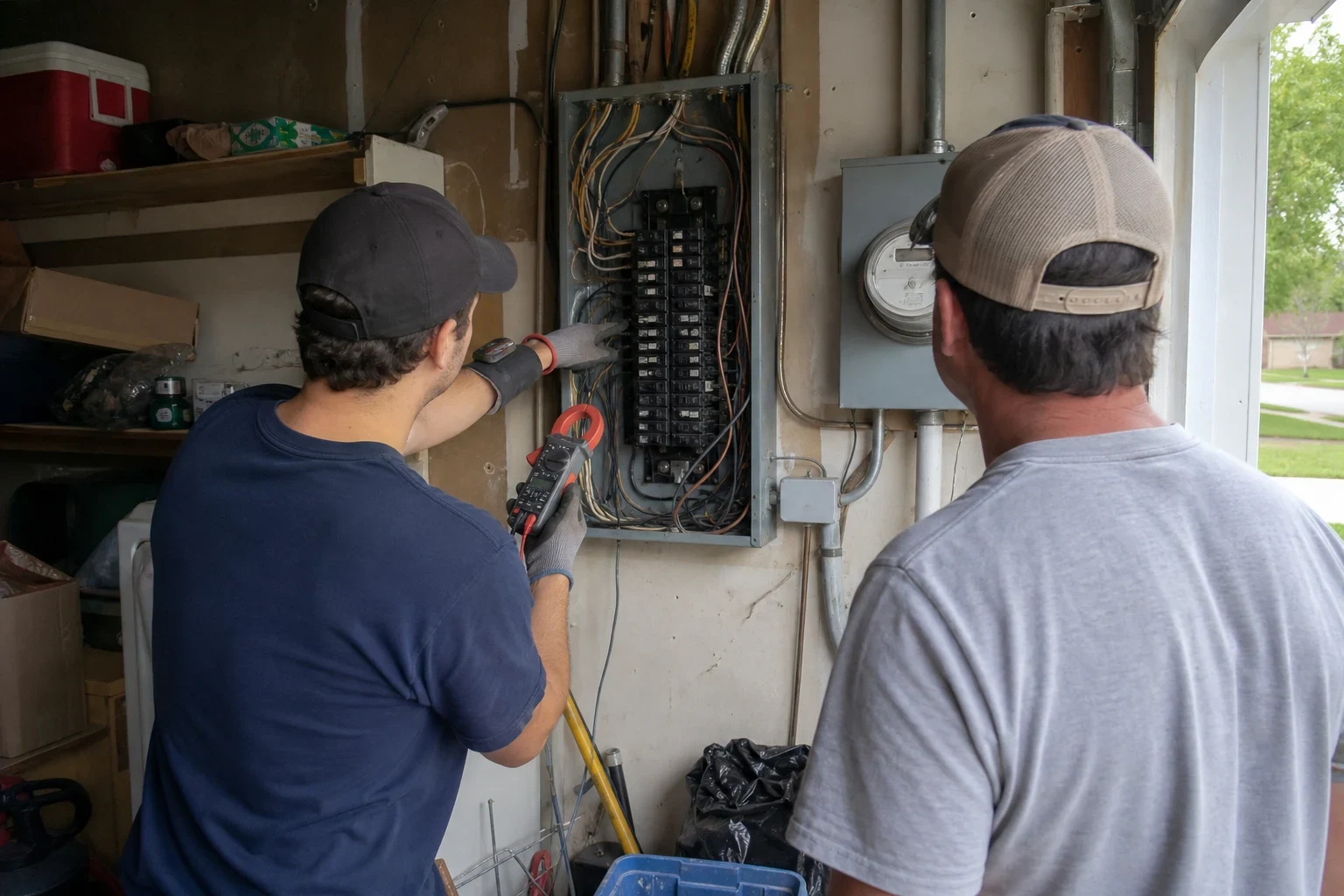
We find out whether a tripping breaker is guarding an overloaded circuit or is worn out itself. A failed breaker is replaced with the right type for your panel, and we check the bus and lugs while the cover is off.
Ground-fault and arc-fault protection
Kitchens, baths, garages and outdoor outlets need ground-fault protection. We test your devices, replace any that no longer trip and explain why a protective device keeps cutting power.
Connections and boxes
Loose wire nuts, buried splices and uncovered boxes get proper connectors and covers, so each connection stays safe and reachable.
Findings in writing
By the end of our talk you know what failed, the reason it failed and what we fixed. Anything else worth keeping an eye on is noted, with photos.
Signs Something Needs Fixing
- A breaker that won't stay on
- Repeated tripping usually means too much load, a short or a breaker that is failing. Resetting it every time hides the problem rather than solving it.
- Flickering or dimming lights
- Lights that dip as the AC compressor or microwave kicks on may signal a loose neutral or a shared circuit carrying too much. In a long Texas summer, that load is on for most of the day.
- Warm or discolored outlets
- A cover plate that feels warm, gives off a burnt plastic smell or shows brown marks has an overheating connection. Quit using it and switch off that circuit until we can inspect it.
- Outlets or rooms with no power
- When part of a room goes dead, the cause is often a tripped GFCI in another spot or a failed connection further up the line. We find the break and restore it correctly.
- Buzzing, crackling or sparks
- Sounds from a switch, outlet or the panel mean current is arcing across a loose connection. Schedule a visit soon.
How a Repair Visit Runs
- 1
You describe the problem by phone
We ask what happened, when it happens and what else was running at the time. That shapes what we bring and how long we set aside.
- 2
We protect the room and test
We lay drop cloths where we work and test the affected circuit before touching anything. Readings tell us whether the fault is at a device, a splice or the panel.
- 3
We explain and you approve
You hear what we found and what the repair involves, with the cost, before work begins. If there is more than one sensible way to fix it, we lay both out.
- 4
Repair, retest and tidy
We make the repair, retest the circuit under load and confirm protective devices trip as they should. Old parts leave with us and the room is left as we found it.
What Affects Repair Pricing
Most of a repair price comes from the time it takes to locate the fault and get to it. You get the repair cost before we start, so you can decide knowing everything. Swapping a simple device is a very different job from a fault hidden in a finished wall.
- How long the fault takes to find
- A plainly scorched outlet goes fast. A problem that only appears under certain loads takes more time to track down.
- Getting to the wiring
- Open attics and easy-to-reach boxes keep labor low. Wiring behind finished drywall or tile, or in a cramped crawlspace, takes more care to reach and close back up.
- Parts for the circuit
- Breakers have to match your panel's brand and type, and some older panels take parts that are harder to find. GFCI and AFCI devices cost more than standard ones.
- Whether a permit applies
- Small like-for-like repairs often need no permit. When the local jurisdiction requires one, we pull it, book the inspection and include it in the quote.
Common Repair Questions
- What keeps tripping my breakers?
- It is usually one of three causes: a circuit carrying too much load, a short or ground fault on the line, or a worn-out breaker. Space heaters, window units and kitchen appliances sharing one circuit are frequent causes. We test to see which it is, since each needs a different fix.
- Should I worry about a flickering light?
- When one bulb flickers, the bulb or socket is often to blame. When several lights flicker at once, or dim as big appliances start, a loose connection carrying heavy current may be the cause. Those connections run hot, so have it checked.
- Will you let me know if the job is bigger than a repair?
- We will, when our testing backs it up. Most repairs stay repairs. If we see that the panel or the wiring itself is the real problem, we explain what we found and what Panel Upgrades or Whole-Home Rewiring would involve, and the choice is yours.
- Do repairs need a permit?
- If the local jurisdiction requires one for the work, we pull it and book the inspection. Plenty of small repairs, like swapping a failed outlet or breaker for the same type, need no permit. We tell you which case applies before we begin.
- Will tightening loose connections cut my power bill?
- A loose connection loses some energy as heat, but the bill savings are usually small. The larger gain is safety and steady performance from your appliances and AC. It is worth fixing either way.
Get the Problem Traced and Fixed
Tell us what is happening and we will set a time to come test it. You will know the cause and the cost before any repair begins.