ServicesGenerator Installation
Generator Installation in River Oaks
We install standby generators that start on their own when the power drops and keep the circuits you care about running. Each system is sized from a real load calculation, so you are not paying to fuel more generator than your home will ever use.
Backup power that fits how your home actually runs
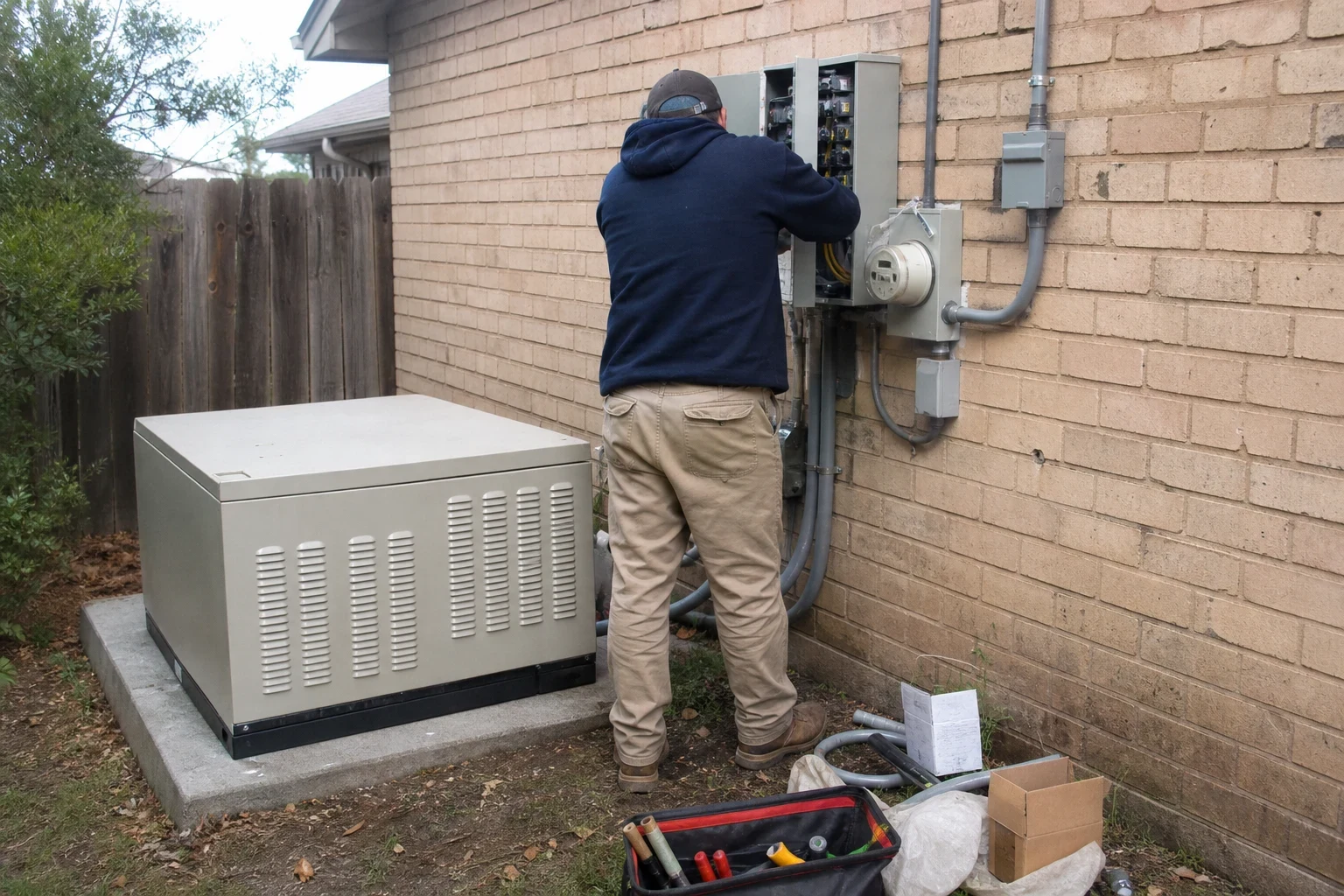
A standby generator sits on a pad outside, connects to your fuel supply and links to your panel through an automatic transfer switch. When utility power fails, the switch isolates your home from the grid, the generator starts, and power returns in seconds. When the grid comes back, it hands the load back and shuts itself down.
The decision that matters most is size. An oversized unit burns more fuel every hour it runs and costs more up front. An undersized one stalls when the air conditioner and the range start together. We measure what you actually use, then recommend either whole-home coverage or a managed set of essential circuits, and explain the running-cost difference between the two.
In North Texas, that usually means keeping cooling going through a summer outage and keeping heat, water lines and the refrigerator safe during a winter freeze.
What the installation includes
- Load calculation
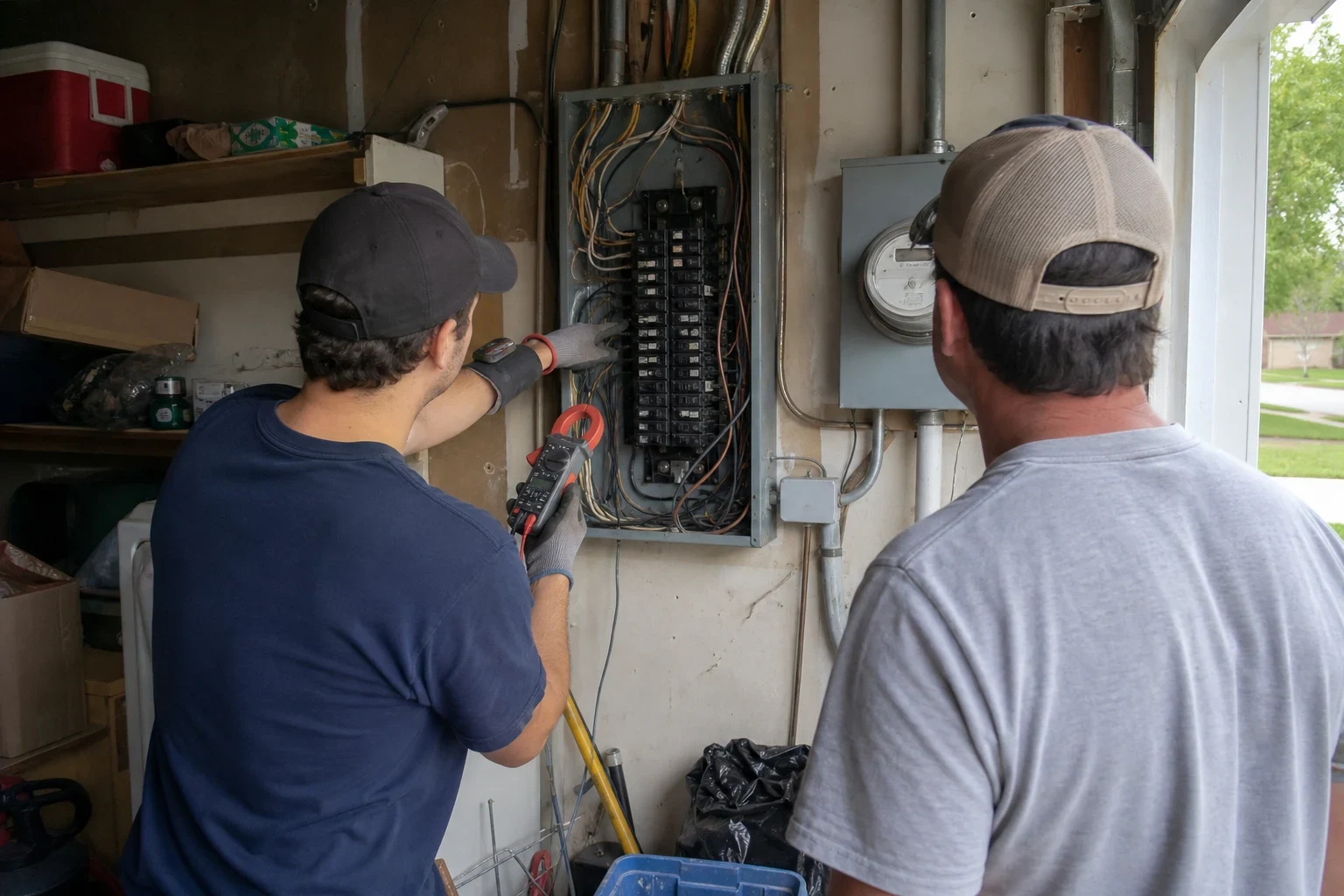
- We review your panel, major appliances and the motors that draw a surge on startup, such as the AC compressor and well or pool pumps. That number decides the generator size, not a guess or a sales sheet.
- Automatic transfer switch
- We install a transfer switch rated for your service so the generator can never back-feed the utility lines. Where it helps, we add load management so large appliances take turns instead of overloading the unit.
- Pad and placement
- The generator goes on a level pad at the clearances the manufacturer specifies from windows, doors and vents. We think about sound, airflow and how the unit looks from your yard before anything is set.
- Wiring and fuel connection
- We run the electrical feeds in proper conduit with neat, secured routing along the exterior. The gas connection is made by a qualified gas professional where your jurisdiction requires it, and we coordinate that timing.
- Permit, inspection and startup
- We pull the permit and schedule inspection as required by the local jurisdiction. Then we start the unit, run a simulated outage with you and set the weekly exercise cycle.
Signs a standby generator makes sense for you
Outages that last more than a few hours
If losing power means a hot house, spoiled food or a cold one in a freeze, automatic backup removes the scramble.
Someone at home depends on power
Medical equipment, a home office or an older family member who should not sit through heat make reliable backup worth planning for.
You are tired of the portable routine
Running extension cords, refueling in the dark and keeping a portable unit at a safe distance gets old. A standby system does all of it on its own.
You have a sump, well or freezer to protect
Equipment that cannot pause for a day is a strong reason to keep at least a few circuits backed up.
Your panel is already near its limit
If you are adding a generator, it is a good moment to look at the panel too. Sometimes a panel upgrade belongs in the same plan.
What moves the cost
Generator projects vary more than most electrical work because the unit, the fuel and the site all play a part. We price from what we see on the service visit and put each part of the job in writing before work starts.
Generator size and coverage
Whole-home coverage needs a larger unit than a managed set of essential circuits. The right size also affects fuel use for every hour it runs.
Transfer switch and panel condition
The switch must match your service size. An older or full panel may need work before the generator can connect safely.
Distance and placement
A longer run from the generator to the panel or gas meter means more conduit, wire and trenching.
Fuel source
Natural gas, propane and the capacity of your existing gas meter each change what the fuel side requires.
Permits and site prep
Permit fees, pad work and grading on an uneven yard all factor into the final number.
How a generator installation runs
- 1
Service visit and load review
We walk the property, open the panel, note your fuel source and talk through which rooms and appliances must stay on. You get a written recommendation on size and coverage.
- 2
Permit and scheduling
Once you approve the plan, we file for the permit and line up the gas connection and any utility coordination needed.
- 3
Installation day
We set the pad and generator, mount the transfer switch near your panel and run the wiring. Walkways and landscaping are protected, and we clean up as we go so the site looks finished when we leave.
- 4
Inspection and handover
After inspection, we simulate an outage so you can watch the switchover, then show you the status panel, the exercise schedule and what routine care looks like.
Generator installation questions
How big a generator do I need?
It depends on what you want to keep running, especially central air, electric ranges and pumps. We do a load calculation on the service visit rather than guessing from square footage. Many homes do well with a mid-size unit and load management instead of the largest model.
Will a standby generator run my central air conditioning?
Yes, if it is sized for it. AC compressors draw a heavy surge on startup, so we account for that, and a soft-start kit on the compressor can sometimes let a smaller generator handle it.
Do you pull the permit?
Yes. We file the permit and schedule inspection as required by the local jurisdiction, and we are on site to walk the inspector through the work.
How loud is it and where will it go?
Modern standby units are far quieter than portables, though you will hear them when they run. We place the unit at the manufacturer's required clearances and choose a spot that keeps sound away from bedrooms and neighbors where the yard allows.
Should I consider battery backup instead?
Batteries are silent and need no fuel, but they hold a limited amount of energy. A generator runs as long as fuel lasts. We can compare both on the visit, and our Home Battery Backup Systems page explains that option.
What maintenance does a generator need?
It exercises itself weekly, but oil, filters, the battery and the transfer switch still need periodic attention. Our Generator Service & Repair team handles that care after installation.
Plan backup power before the next outage
We will look at your panel, your fuel supply and the loads that matter, then recommend a system that fits. A service visit is the first step.