ServicesGenerator Service & Repair
Generator Service & Repair in River Oaks
A standby generator only earns its place if it starts the moment the grid drops. We test the battery, transfer switch, controller and engine, fix what is worn or failing, and set the unit up to run cleanly without burning more fuel than it needs.
Keeping backup power ready for the day you need it
Most generators sit idle for months, then are asked to carry your home through a summer outage or a winter ice storm. Idle time is hard on them. Batteries lose charge, seals age, rodents nest in enclosures, and a transfer switch that has not moved in a year can stick.
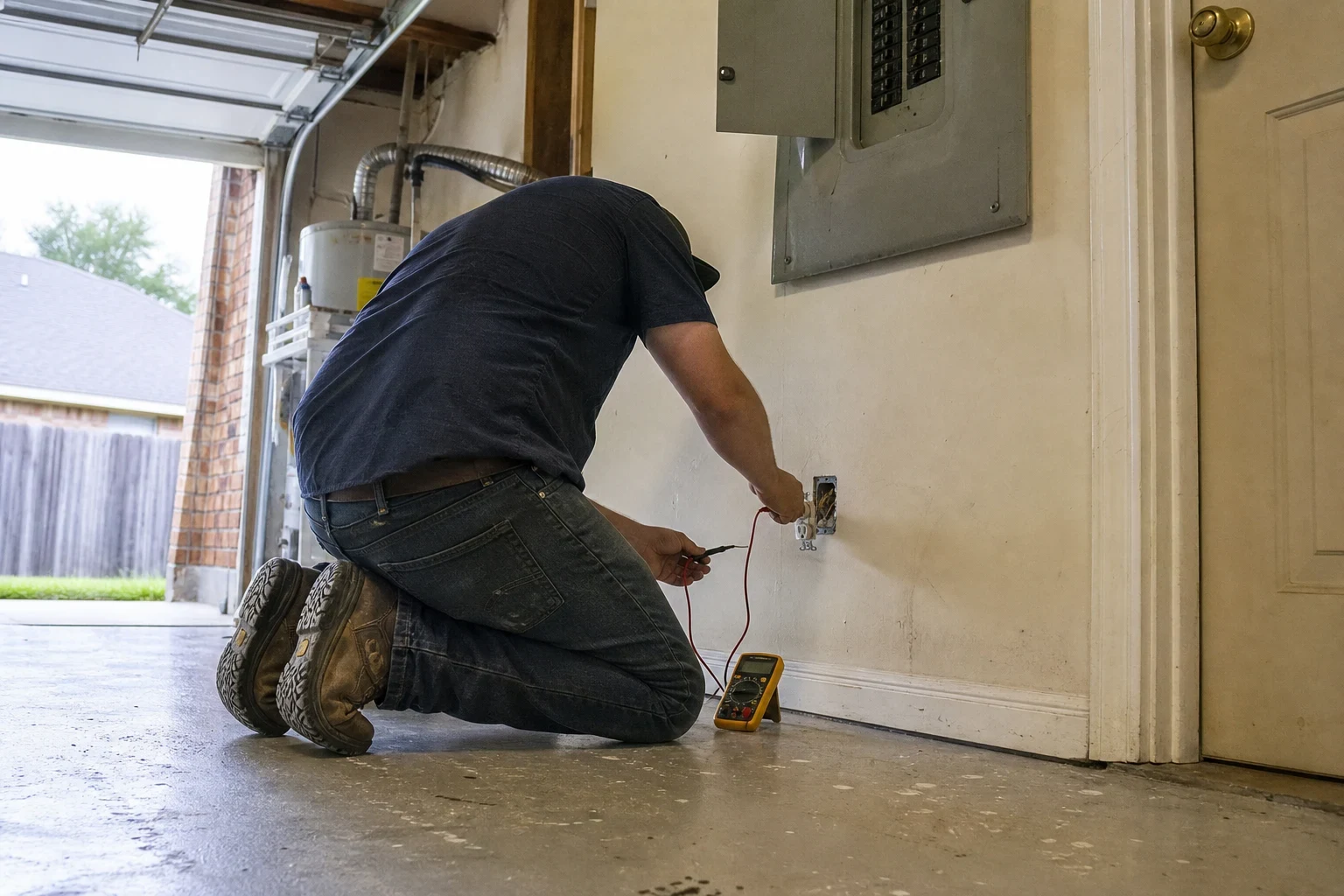
Our generator service and repair covers the electrical and engine sides of standby units, plus the connection that lets a portable generator feed your home. We find why a unit will not start, shows a fault code or stumbles under load, then repair it or tell you plainly when a part is not worth saving.
There is a running-cost side too. Dirty filters, worn plugs and a poorly managed load make an engine work harder and use more natural gas or propane per hour. We tune for that as well.
What we check and service
- Starting battery and charger
- We put the starting battery under a load test and confirm the charger is keeping it full. A failing battery causes more no-starts than anything else, and it seldom warns you first.
- Controller and transfer switch
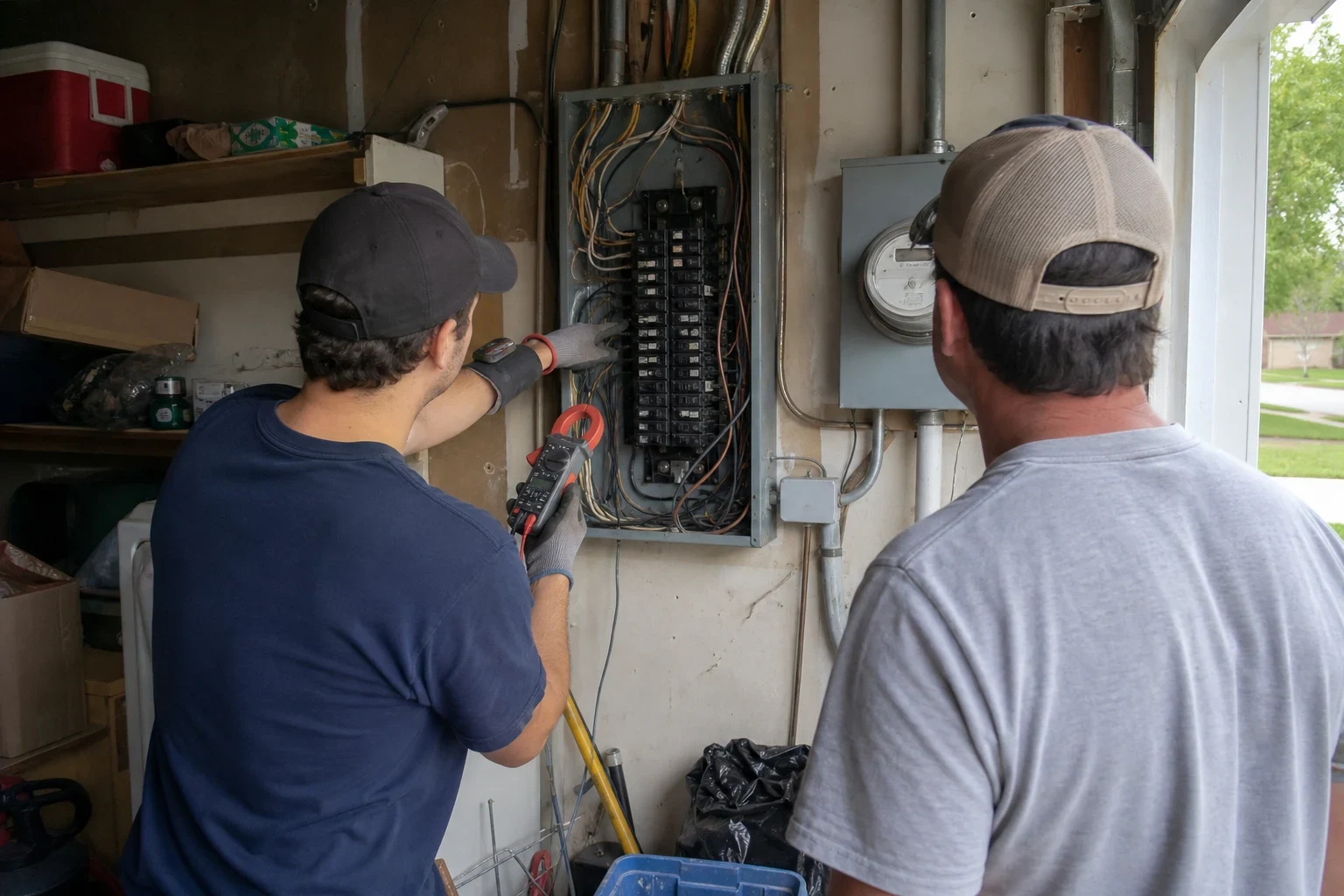
- A simulated outage makes the transfer switch shift your home to generator power and back again. We look over the contacts, wire terminations, controller settings and fault history.
- Engine upkeep
- Oil and oil filter, air filter and spark plugs, plus coolant, hoses and belts on liquid-cooled units, all on the schedule the manufacturer sets for your model.
- Fuel line and inlet check
- We inspect the fuel connection at the unit for damage or wear and let you know if your gas supplier or a plumber needs to handle anything. For portable setups, we check the inlet box and cord for signs of heat.
- Exercise schedule and load settings
- We set the weekly exercise to a reasonable length and make sure load management drops large appliances in the proper sequence, so no fuel goes to needless idling or overload.
Warning signs your generator needs a visit
The weekly exercise run stops
When you stop hearing it run on its regular day, the controller may have shut it down on a fault or the battery may lack the power to crank it.
A fault code or warning light appears
Low oil pressure, overcrank and frequency codes each point to a particular fault. Resetting them without a repair usually brings them back in the middle of an outage.
Lights waver while on generator power
Voltage that wanders under load hints at a fuel supply, governor or load-balance problem, and it is rough on motors and electronics.
More than a year without service
A unit that seems healthy still needs its oil, filters and battery check on time. Minor wear that goes unchecked often turns into a no-start when you can least afford it.
Rough starts, smoke or unfamiliar sounds
Black smoke, uneven running or knocking when it starts should be checked before the unit has to carry your home for days.
What affects the cost of generator service
Routine service on a well-kept unit is straightforward. Repairs vary more, so we price them after testing and put the numbers in writing before starting.
Make, model and size
Larger liquid-cooled units take more oil and coolant and have more to check than smaller air-cooled models. Some brands use parts that are slower to source.
Time since last service
A unit left for several years often needs a battery, plugs and a full fluid change at once, and terminals may be corroded.
What actually failed
A dead battery or charger is a simpler fix than a controller board, a starter or a transfer switch with burned contacts.
Access and site condition
Units tight against a fence or overgrown take longer to reach, and rodent damage to wiring adds time.
What happens during a generator visit
- 1
Scheduling and unit details
On the phone we ask for your unit's make, model and age and anything you have noticed, so we arrive with the right filters, plugs and battery.
- 2
Testing on site
We pull the fault log, test the battery, start the engine and load it with a simulated outage. Anything worn or damaged gets photographed.
- 3
What we found and your choices
For any repair past routine service, we go over our findings with you and put a price on each item in writing. You choose what we do.
- 4
Repair, load test and cleanup
We finish the work, load-test the unit again, set the exercise schedule back up and leave the enclosure and surrounding ground clean.
Common generator service questions
How often does a standby generator need service?
Most makers ask for service every year or after a certain number of run hours, whichever arrives first. A unit that ran for days in an outage can be due early. We check the hour meter and let you know.
Will you work on a generator someone else installed?
We will. We service standby units from the usual residential brands no matter who put them in. If the installation has problems, like a breaker that is too small or no ground, we explain them and quote the fix on its own.
The generator runs, so why doesn't my house switch over to it?
The cause is usually the transfer switch, the wiring that controls it or a controller setting, not the engine. A simulated outage lets us pinpoint which piece is failing.
Does a tune-up cut fuel use?
It can. With clean filters, the right plugs and good fuel delivery, the engine burns fuel efficiently. Shortening an overlong exercise run and making sure load management drops the right appliances also lowers how much gas or propane it uses each year.
Does an older generator deserve a repair?
Usually, when the engine is healthy and parts can be found. If a big repair is needed and parts are scarce, we tell you directly and can discuss a new generator installation or a home battery backup system.
Get your generator ready before the next outage
Tell us the make, model and what you have noticed, and we will book a service visit at a time that suits you. Spring and fall are good times to have it checked, before summer storms or winter freezes test it.