ServicesWhole-Home Rewiring
Whole-Home Rewiring in River Oaks
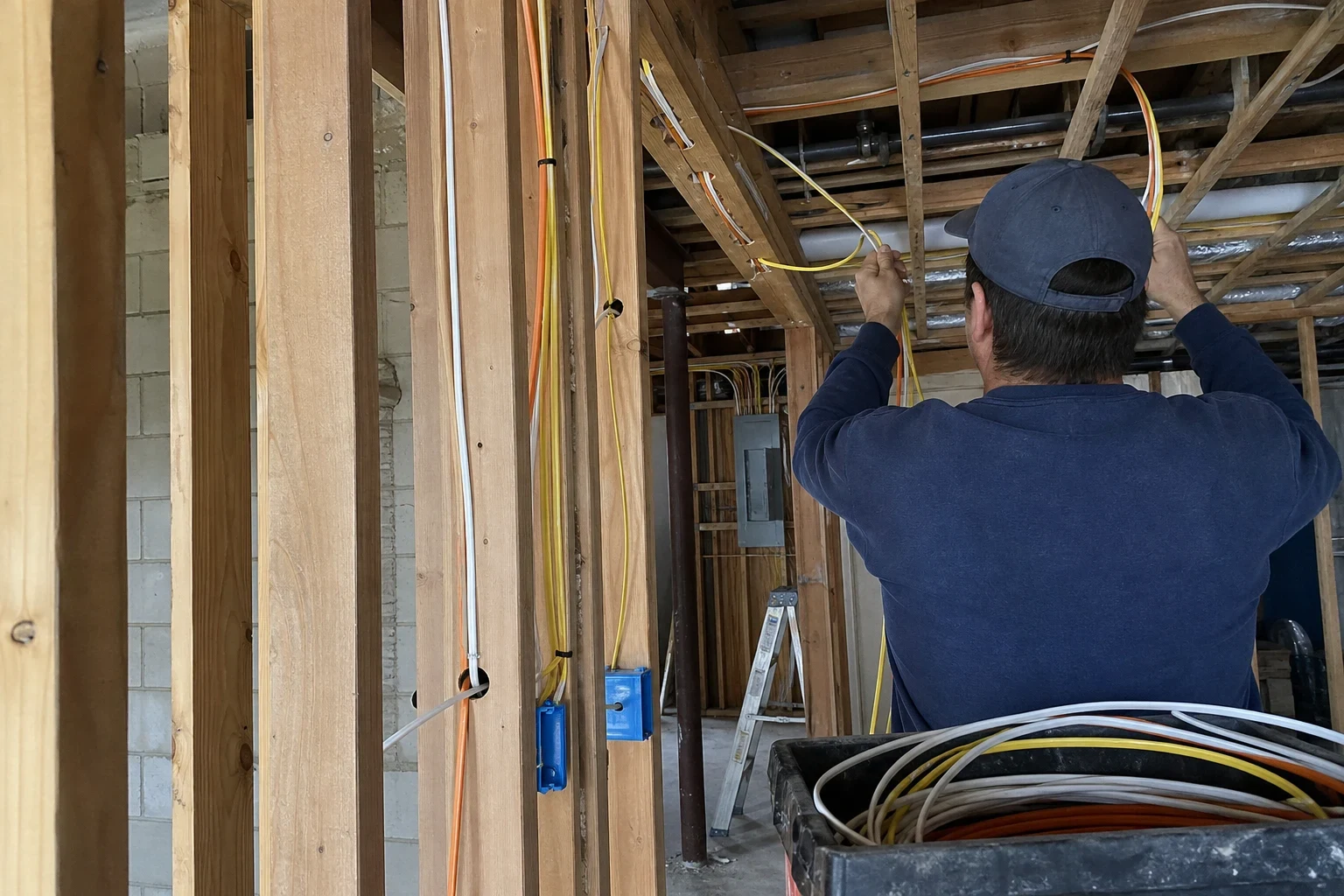
We replace tired wiring with new copper circuits laid out for how your home runs today. The work is planned room by room, opened through small, careful access points and patched neatly, so you get a safer system without living in a construction site.
When a Full Rewire Is the Right Call
Wiring ages quietly. Insulation turns brittle, connections loosen and circuits that once ran a radio and a few lamps now carry air conditioning, a dishwasher and a home office. When the problems are spread through the house rather than in one spot, patching them one at a time costs more over the years than replacing the system once.
A rewire is not always the answer, and we will say so. If the trouble is limited to one circuit or a few worn outlets, our electrical repair work may be all you need. When we do recommend a full rewire, we show you why with photos and a plain explanation of what we found.
There is a comfort and running-cost side too, though we keep it honest. New wire will not cut your bill on its own. It does stop the heat lost at loose, corroded connections, keeps voltage steady to your air conditioner and motors, and gives you dedicated circuits for efficient equipment like heat pumps or induction ranges.
What a Rewire With Us Includes
- Room-by-room circuit plan
- We map every room, note how you use it and lay out circuits so kitchens, bathrooms and laundry each get the capacity they need. Fewer shared circuits means fewer trips and lights that stay steady.
- New copper wiring throughout
- Old cloth-insulated, ungrounded or aluminum branch wiring comes out of service and is replaced with modern grounded copper cable, run through the attic and walls with as little disturbance as possible.
- Grounded outlets and protected circuits
- Two-prong outlets become grounded three-prong outlets. GFCI and AFCI protection goes where current code calls for it.
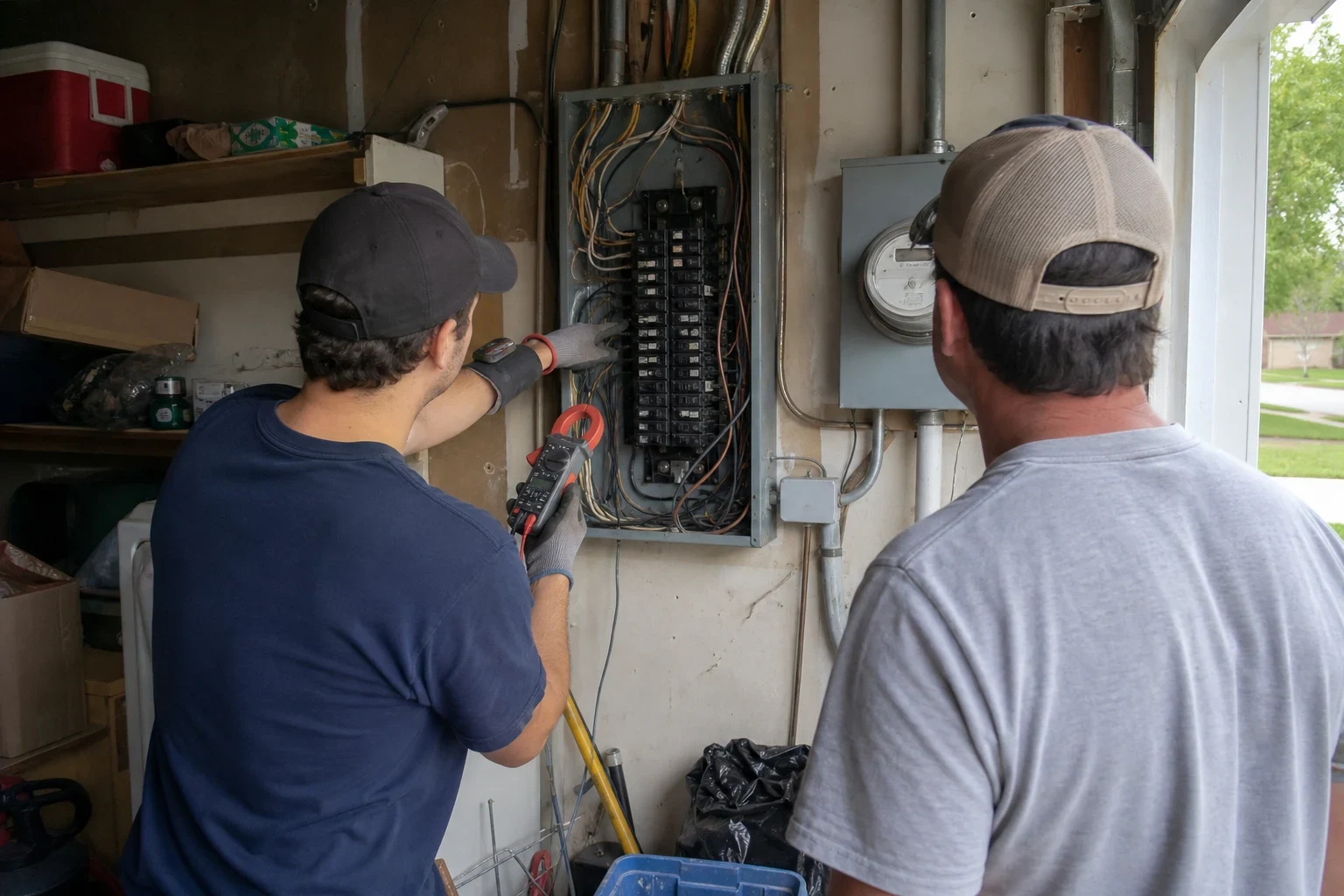
- Panel check and connection
- We confirm your panel can support the new layout. If it can't, we explain the options, and a panel upgrade can be planned alongside the rewire.
- Careful access and patching
- We open small, measured holes rather than long trenches, and patch them flush and ready for paint when the wiring is done.
Signs Your Home May Need Rewiring
Lights dim when the AC starts
A noticeable dip each time the compressor kicks on through a long summer often points to undersized or worn wiring and tired connections.
Two-prong outlets in most rooms
Ungrounded outlets usually mean ungrounded wiring behind them. Surge protectors and many appliances can't do their job without a ground.
Warm switch plates or a burning smell
Heat at a switch or outlet means resistance at a connection. That is wasted energy and a fire risk, and it is worth a visit soon.
Breakers that trip often
Frequent trips across several rooms suggest the circuits were never sized for today's loads.
Cloth or aluminum wiring
If you have seen fabric-wrapped wire in the attic or aluminum branch wiring at a fixture, the system has likely reached the end of its useful life.
Questions from your insurer
Some insurers ask about wiring type and age. A rewire with a passed inspection gives you a clear answer.
How the Work Runs
- 1
Walkthrough and testing
We visit, open a few devices, look in the attic and at the panel, and test circuits. You get photos and a plain account of what we found.
- 2
Written scope and permit
We put the circuit plan and the work in writing before anything starts. Permits and inspections are handled as required by the local jurisdiction.
- 3
Protected rooms, steady progress
Floors and furniture are covered, and we work through the house in sections so you keep power in the rooms you are using. Dust is cleaned up at the end of each day.
- 4
Rough-in inspection
Once new wiring is in place and before walls are closed, the inspector reviews the work.
- 5
Patching, testing and walkthrough
We patch openings, install devices and covers, and test every circuit. Then we walk you through the panel labels and the new layout.
What Goes Into the Price of a Rewire
We price each rewire after the walkthrough, since two same-size houses can hide very different wiring. You get a written scope broken into line items, so you know where your money goes before deciding.
- Home size and circuit count
- Each added room, outlet and dedicated appliance circuit adds wire and labor.
- Getting into the walls
- An open attic and crawlspace speed up the runs. Slab foundations, shallow attics and finished ceilings call for slower, more careful routing.
- Type of wall surface
- Plaster and textured drywall take longer to open and patch neatly than smooth drywall.
- State of the panel
- A panel that is full, dated or too small for the new layout may need replacing, which expands the scope.
- Permits and inspections
- Any required permits and inspection visits are included in the job and shown in the scope.
Common Questions About Rewiring
Something not covered here? (682) 397-7909
Will we need to leave the house while you rewire?
Usually not. We go section by section, keep the rooms you rely on powered, and bring circuits back on at the end of each day whenever possible. Any longer outage is discussed with you in advance.
How many days does a full rewire take?
That comes down to the home's size, access and wall finishes. Plenty of houses take several working days, plus the inspection. Your written scope includes an expected schedule.
How much of my walls will you open?
We cut small access openings at outlets, switches and a few key spots instead of long channels, then patch them flush and ready for paint.
Is the permit part of your job?
It is. We take care of permits and inspections as the local jurisdiction requires and book the inspection for you.
Does rewiring reduce my electric bill?
A little at most, and we won't claim more. Failing connections stop wasting energy as heat, and your AC and appliances get steady voltage. The larger savings come from efficient equipment the new circuits make room for.
Can I keep my current panel?
In some cases. If it has space, is in good shape and can handle the new load, it stays. If it can't, we explain the reason and price a new one separately so you can compare.
Start With a Look Inside the Walls
We will test your circuits, show you what we find and lay out a rewire plan that fits your home. Booking a service visit is the first step.